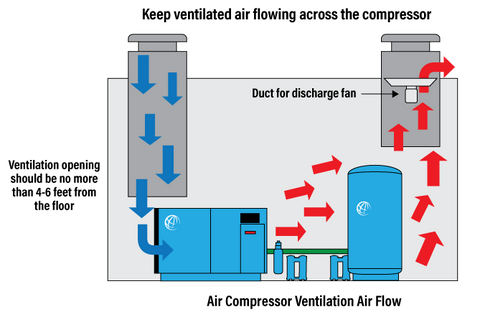
Compressed air is the most expensive utility in a factory
By minimizing compressor losses, we can account for 20-35% of energy wastage in industrial plant.
It requires a combination of regular maintenance, system design optimization, and technological upgrades.
Key areas for, targeting reduction include leaks, pressure drops, inefficient controls, and heat loss.
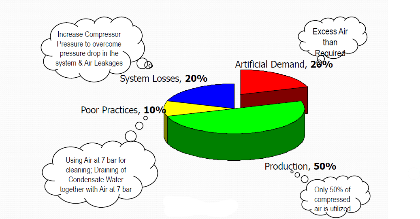
1. Eliminate Compressed Air Leaks
Leaks are the most significant source of energy waste, often accounting for 25–30% of total system output
-
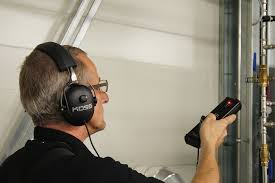
Conduct Regular Audits: Use ultrasonic leak detectors for quarterly, or even more frequent, inspections of pipes, fittings, and connectors.
-
Fix Promptly: Even a small 1/4-inch leak at 100 psi can cost thousands per year in energy.
-
Target Known Culprits: Focus on, quick-connect couplings, hoses, and faulty, old-style timer drains.
-
Replace Old Drains: Replace timer-based condensate drains with "zero-loss" drains to prevent air from escaping with moisture.
2. Minimize Pressure Drops
A well-designed system should keep pressure loss below 10% of the compressor's discharge pressure.
- Maintain Filters: Clogged intake filters can reduce capacity by 1% for every 100 mm of water pressure drop
replace them immediately when dirty.
-
Optimize Piping: Shorten pipe lengths, remove unnecessary bends, and avoid using undersized piping.
-
Eliminate Unnecessary Components: Remove / replace high-restriction filters, and regulators that are not strictly necessary
3 Upgrade to Efficient Controls (Addressing Transient Losses)
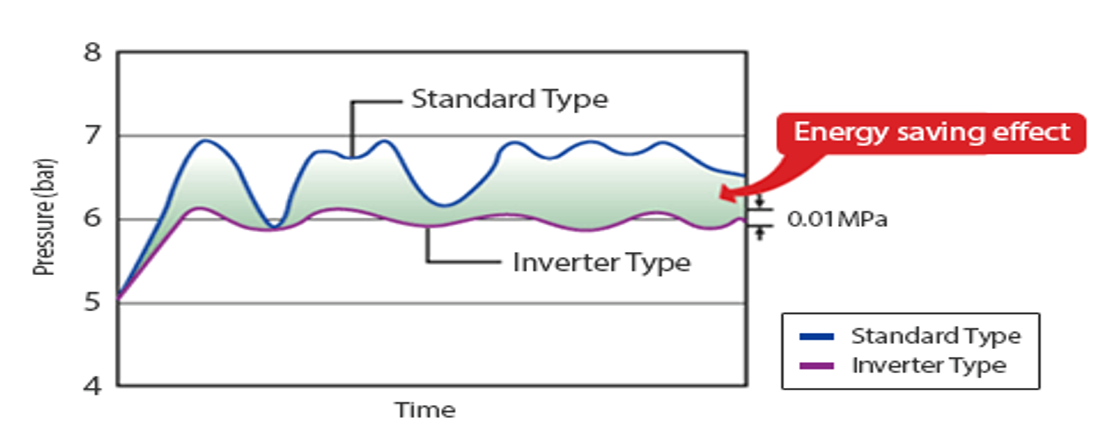
Fixed-speed compressors often lose up to 20% of their energy to "transient losses"
energy used during loading/unloading without producing air.
Install Variable Speed Drives (VSD): VSD compressors almost entirely eliminate losses by adjusting motor speed to match air demand.
Use Smart Controllers: Implement modern sequencing controllers that manage multiple compressors to run at peak efficiency.
Proper Sizing: Ensure the compressor is properly matched to the demand to avoid excessive idling.
4. Optimize Intake and Operating Conditions
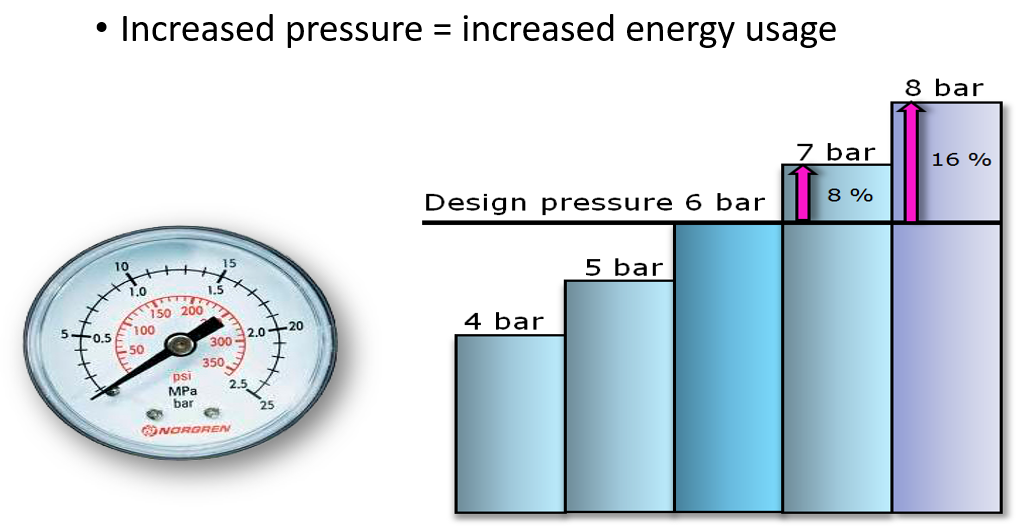
| Cool Intake Air: Every 4°C (about 7°F) reduction in intake temperature results in roughly a 1% efficiency gain. Lower Operating Pressure: Reduce the system pressure to the minimum required level; a 1 bar (100 kPa) reduction can save about 8% of energy costs. Use Air Receivers: Install air receiver tanks (buffers) to stabilize pressure and reduce the compressor from cycling on and off | Summary Checklist for Efficiency | |
|---|---|---|
| Leaks | Regular auditing, repairing, using low-pressure, high-efficiency nozzles. | |
| Pressure Drop | Proper piping design, cleaning/replacing filters, removing faulty regulators. | |
| FAQs | Transient Losses | Installing Variable Speed Drive (VSD) compressors. |
| Idle Running | Installing automatic, programmable shut-off timers. | |
| Heat Waste | Installing waste heat recovery systems (heat exchangers). |