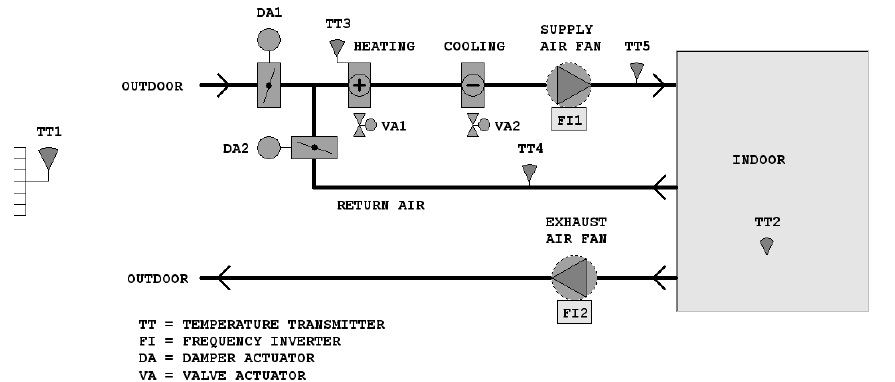
Return air ventilation system
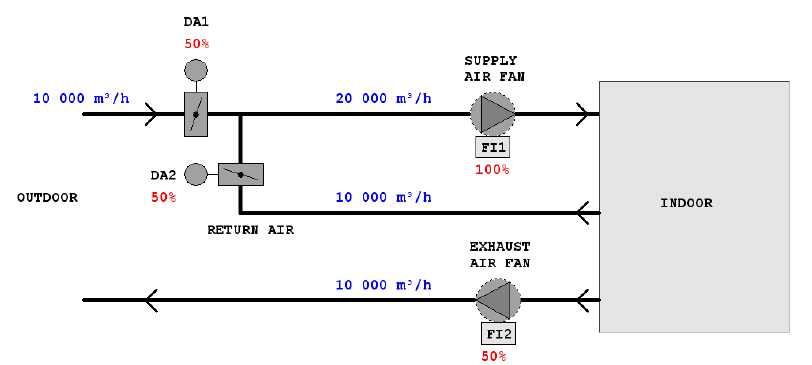
Return air system improve HVAC efficiency by partialyy using room air after filteration.
Proper ventilation requires balancing this recirculated air with fresh outdoor air.
This will maintain indoor air quality, preventing stale air buildup and lowering energy costs.
Key aspects - Air Quality maintenence, Balance airflow,
Optimal circulation, Obstruction management
Filteration
Temprature control
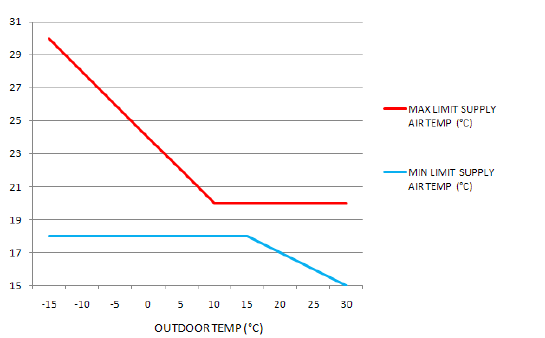
The room temprature setpoint (TT2) is based on actual outdoor temp
High and Low limit of supply air temprature (TT 5) is controlled by BMS control curve
During Winter i.e outdoor temp < indoor temp; more outdoor air % used keeping indoor air % same
And in summer i.e.Indoor temp < outdoor temp; more return air used.
Ventilation airflow
The ventilation airflow is dependent on the amount of cooling/heating or fresh air needed .
Variable airflow : The BMS system controlling the system to only maintain the minimum airflow needed .
Balanced airflow : The supply airflow and the exhaust airflow controlled by the BMS system in balance way.
This will ensure that every room will neither be over pressure or under pressure
Demand Control
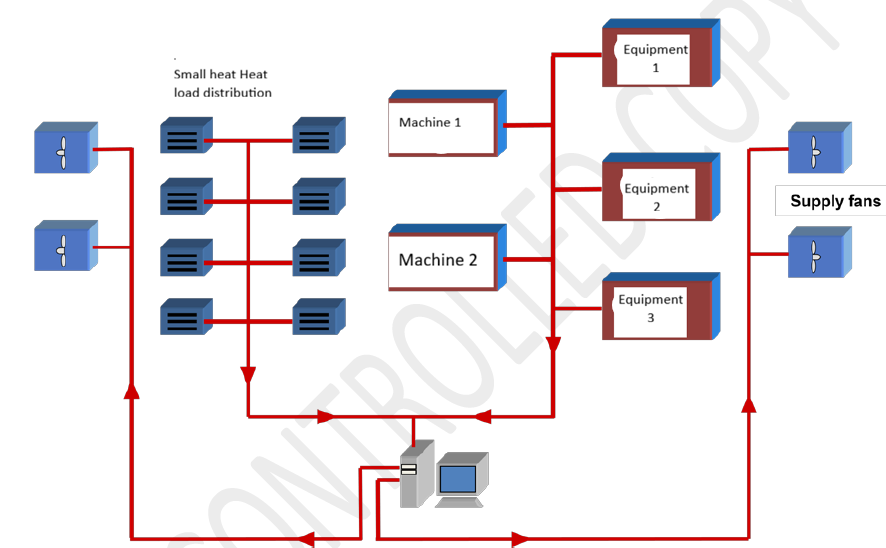
It objective to maintain the air flow balance between supply/exhaust in the production hall
It check for heat load produced due to the production machines are running.
During head load increases, speed of perticular exhaust fan increases to released hot air from heat genration area
This leads to reduce unnecessary cooling loads during machine operation and stop condition.
Energy saving is about 20-25 %
New Design
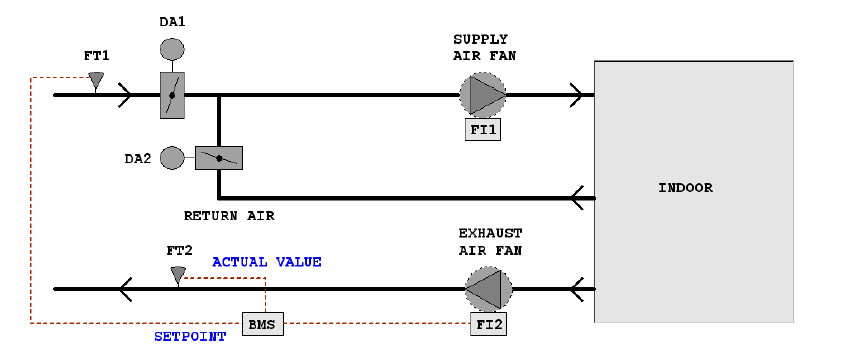
Install airflow transmitters to the BMS system measuring the Outdoor supply air flow (FT1) and the exhaust air flow (FT2).
The BMS system set the frequency inverter for the exhaust fan (FI2)
It is controlled to keep the same exhaust airflow (FT2) as the outdoor supply air flow (FT1).
The supply air flow can then be controlled by the demand of heating/cooling or fresh air needed for every room.